


Ongoing research

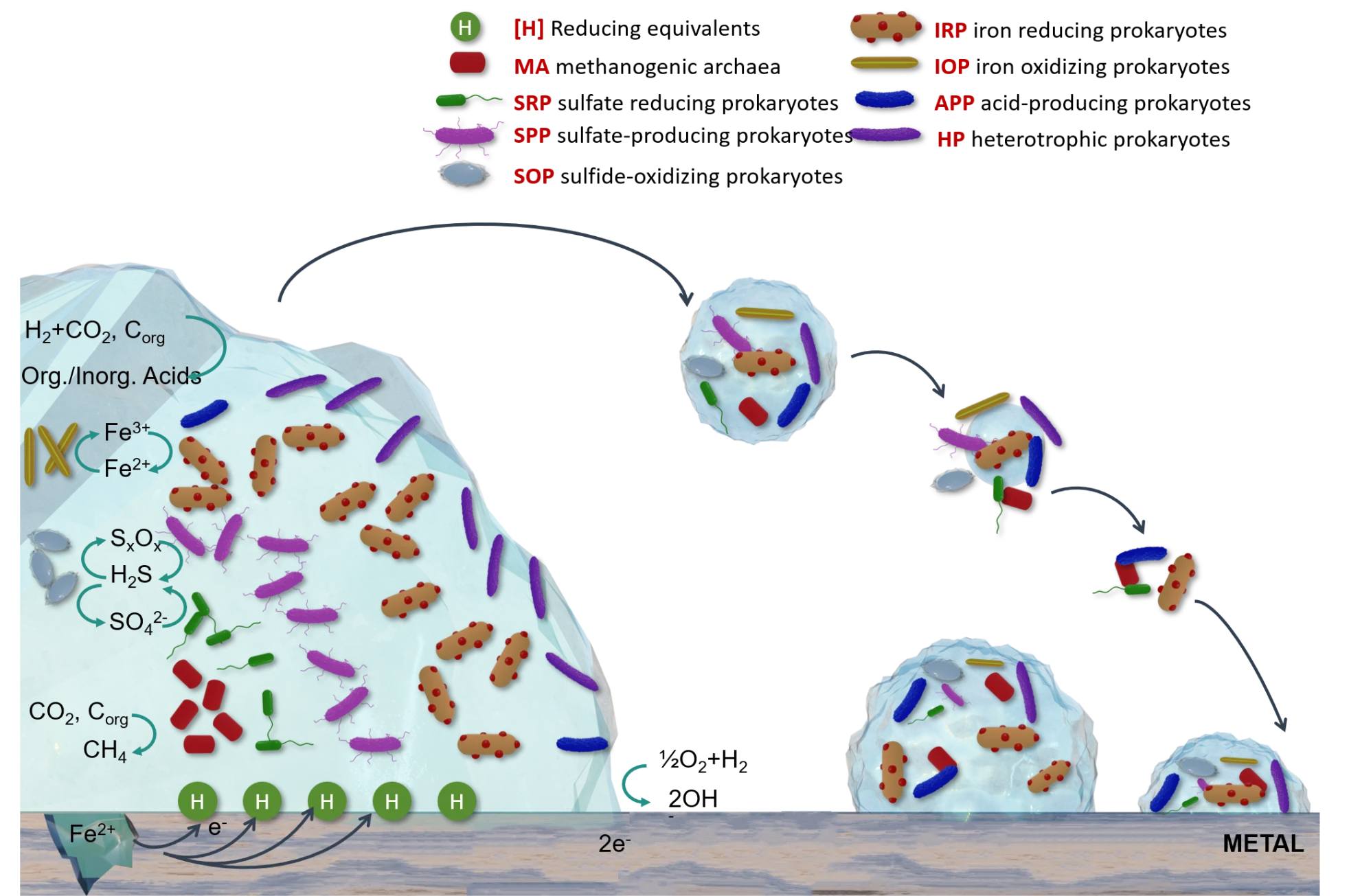
Initial bacterial retention on polydimethylsiloxane of various stiffnesses: The relevance of modulus (mis)match
Viktoriia Drebezghova et al. Colloids and Surfaces B: Biointerfaces, 2022, 217, pp.112709. ⟨10.1016/j.colsurfb.2022.112709⟩
We studied the initial retention of the bacterium Escherichia coli on model poly(dimethylsiloxane) (PDMS) surfaces was studied as a function of substrate bulk and surface mechanical stiffness values. Our reference PDMS system was designed such that out of the parameters that govern bacterial adhesion only the mechanical stiffness was systematically varied. This was achieved by varying the crosslinking density of PDMS. Following crosslinking, we performed Soxhlet extraction of non-crosslinked, free chains to rule out their effect on bacterial response. We observed a decreasing trend with the increase of both bulk and surface mechanical stiffnesses down to a limit corresponding to the Young’s modulus of the bacterial cell surface. For higher values than this threshold, the number of retained bacteria remained constant. We tentatively explain this observation by considering conformal overlay of bacterial and material surfaces.
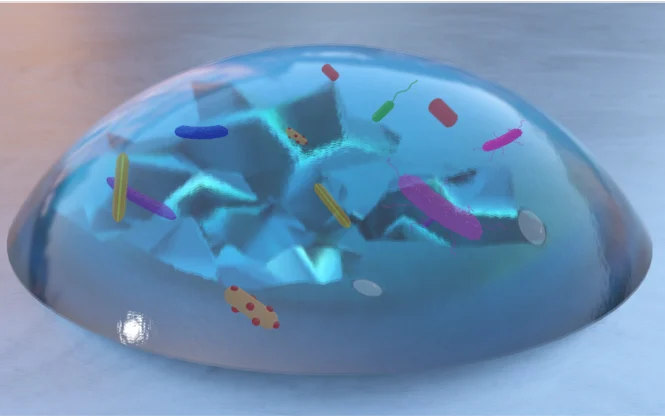
Sucrose and Glycerol Additives: A Way to Tune the Biological and Physicochemical Properties of Agarose Hydrogels?
V. C Igbokwe et al. , Macromolecular Materials and Engineering, 2024, ⟨10.1002/mame.202400150⟩
Sucrose and glycerol have gained attention as additives for hydrogels, owing to their capacity to exert considerable influence over the physicochemical, mechanical, and biological characteristics of these materials. We thus explored these effects on agarose hydrogels (AHs). A series of AHs were synthesized using sucrose (30% and 300% w/v) and glycerol as additives. Sucrose enhances the hydration capacity of the hydrogels by up to 170%, whereas glycerol reduces it. Interestingly, sucrose and glycerol individually do not have bacteriostatic effects against Staphylococcus epidermidis , but their combination significantly ( p ≤ 0.001) inhibits the growth of both S. epidermidis and Pseudomonas aeruginosa by 63% and 29%, respectively, in comparison to native agarose. Cytotoxicity testing on NIH/3T3 murine fibroblasts revealed that sucrose increases cell viability up to 98%, while glycerol reduces it below 60%. Overall, these hydrogels hold promise for antibacterial biomedical applications as wound dressing materials and surface coatings for medical devices and can also be used to formulate bioinks for 3D bioprinting.
Research location